
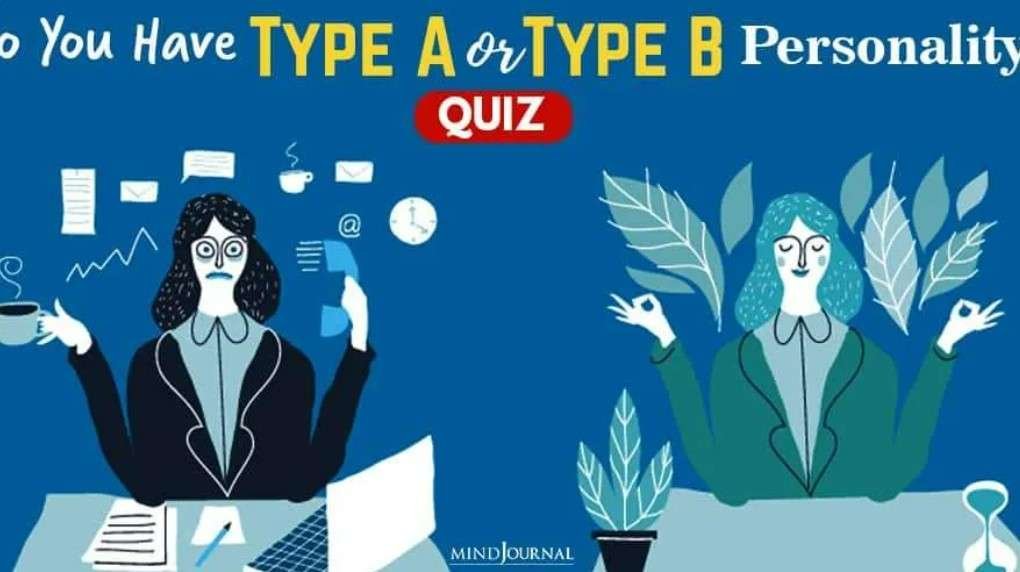
Type A or Type B?
- The personality debate that took over our holiday
There are few things in life that reveal a person’s true personality quite like travelling with them. You can know someone for years, work with them every day, be terribly close friends, and even share a home, but put them in an airport with an early morning flight, delayed boarding, missing chargers, and a group itinerary, and suddenly everything becomes clear.
Over the past few weeks, while travelling with a group, one conversation kept resurfacing again and again: “Are you Type A or Type B?” The question started innocently enough, then it became a full-blown debate.
Some people proudly declared themselves Type A, while others firmly identified as Type B, and of course several attempted to negotiate middle-ground positions. “I’m Type A at work and Type B on holiday,” “I’m a B-plus,” “I’m only Type A when nobody else is taking responsibility,” and perhaps the most honest answer of all: “It depends who I’m travelling with.”
If you’ve spent any time online recently, you’ve probably encountered the Type A versus Type B discourse. Social media is flooded with videos comparing the two personality types. The Type A traveller arrives at the airport three hours early, has already checked the gate number twice, packed a week ago, and carries a colour-coded itinerary. Then we see the Type B traveller is still deciding what clothes to bring an hour before departure and somehow makes it to the gate with 30 seconds to spare.
The videos are exaggerated, of course, but like many internet trends, they resonate because they contain just enough truth to feel painfully familiar.
The two types
The concept itself is not new. The Type A and Type B personality framework dates back to 1959, when cardiologists Meyer Friedman and Ray Rosenman developed the theory while researching behaviour patterns and heart disease.
Type A personalities were associated with ambition, competitiveness, urgency, impatience, and achievement-oriented behaviour. Type B personalities, meanwhile, were characterised as more relaxed, flexible, patient, and easygoing.
Over the decades, the concept moved beyond medicine and into popular culture, where it became one of the simplest ways people describe themselves, and today, most people are not quoting cardiology research when they say they’re Type A or Type B.
Usually, if someone is Type A, what they mean is simple; they’re organised, they like plans, and they know exactly where their passport is.
For Harish Jayakody, a self-identified Type A personality, the label fits comfortably. “I am definitely Type A when it comes to travel,” he said. “I like knowing what’s happening, where we’re going, how we’re getting there, and what the backup plan is if something goes wrong.”
Harish admitted that his planning tendencies sometimes became a source of amusement for friends. “I’ve absolutely arrived at airports ridiculously early before, but I’ve also never missed a flight.”
The Type B members of the group were quick to point out that arriving three hours early simply meant spending three unnecessary hours in an airport and neither side appeared convinced by the other’s argument. That, perhaps, is the essence of the Type A versus Type B debate.
Each side genuinely struggles to understand why the other operates the way they do. For Type A personalities, planning creates peace, and for Type B personalities, overplanning creates stress.
Kasun Abeywickrema identifies strongly with the latter category, sharing: “I’ve always been fairly relaxed about most things,” he said. “If something changes, we’ll figure it out. If a plan doesn’t work, we’ll adapt.”
Kasun believes many people spend too much energy worrying about situations that may never occur. “Sometimes I think Type A people stress themselves out unnecessarily.”
However, he added: “But usually they’re also the reason the rest of us know where we’re supposed to be.”
It’s difficult to argue with that. Because, while Type A personalities are sometimes accused of being controlling, they are often the people holding entire group activities together; they book the accommodation, they make the reservations, they remember the departure times, they create the WhatsApp groups.
Meanwhile, Type B personalities contribute something equally valuable; they remind everyone else to relax.
The funny thing about travelling with mixed personality types is that both groups eventually realise they need each other. Without the Type A personalities, things occasionally descend into chaos and without the Type B personalities, nobody has any fun.
Strengths and downsides
Manek Abbas sees himself as someone who leans towards Type A tendencies, particularly when it comes to work.
“I like structure,” he said. “I like having goals and knowing what I’m working towards.” For him, organisation isn’t restrictive, it’s freeing. “When I have a plan, I feel less stressed because I know what needs to be done,” he said.
This reflects one of the major strengths often associated with Type A personalities. They tend to be goal-oriented, highly motivated, and comfortable taking responsibility. Many successful leaders, entrepreneurs, athletes, and professionals exhibit Type A characteristics.
The downside, however, is that the same traits that drive achievement can also create pressure. Type A personalities are often more vulnerable to stress, they may struggle when plans change unexpectedly, they frequently set extremely high expectations for themselves, and perhaps most importantly, they often have difficulty switching off.
Meanwhile, Type B personalities possess strengths that are frequently overlooked. They tend to adapt more easily when circumstances change, they generally cope better with uncertainty, they often remain calm in situations that send Type A personalities spiralling, and while they may not always appear as productive, they frequently experience lower levels of stress and anxiety.
Of course, modern psychology recognises that people rarely fit neatly into one category, noting that human personalities are considerably more complicated than a simple A or B classification. In fact, one of the most interesting parts of our travel discussions was discovering how many people felt they sat somewhere in between.
Several group members explained that they become more Type A when surrounded by highly relaxed people. Others admitted they become more Type B when travelling with highly organised friends because they know someone else has everything under control.
In other words, personality is often situational – people adapt. Someone who is meticulous at work may become completely carefree on holiday. Someone who appears relaxed most of the time may suddenly become the responsible organiser when circumstances require it. This flexibility is perhaps why so many people resist being placed firmly into either category.
The complexity of being human
The rise of personality-based content online has only amplified these conversations. Every few months, social media discovers a new way to categorise people. There was the attachment styles debate, then that of the love languages, along with star signs, personality tests, Enneagrams, and many others.
Now Type A and Type B have joined the endless cycle of internet self-diagnosis. Part of the appeal is obvious: it makes sense that people enjoy understanding themselves, or at least they enjoy feeling understood; there is comfort in recognising yourself in a description. There is comfort in realising that other people think, behave, and respond to situations in similar ways.
The danger, however, is taking these categories too seriously, because ultimately, no personality framework can fully capture the complexity of a human being. Just as we observed, the organised planner may also be spontaneous and the laid-back creative may be fiercely competitive. The Type A executive may be incapable of packing a suitcase and the Type B dreamer may secretly run their household with military precision. People are contradictions, and perhaps that’s what makes these conversations enjoyable rather than scientific.
At the end of our travels, one conclusion became abundantly clear – that the most successful groups contained a mix of both personality types. The Type A personalities ensured the trip happened and the Type B personalities ensured everyone enjoyed it.
While sharing his thoughts, Kasun summed it up perfectly: “The Type A people make sure we catch the flight. The Type B people make sure we don’t spend the entire holiday worrying about the return flight.”
Perhaps that is the real lesson hidden beneath all the TikTok videos and personality quizzes. The goal is not to determine whether Type A or Type B is better, neither is. The goal is understanding that different people move through the world differently. Some find comfort in plans, others find comfort in flexibility, some need schedules, and others need spontaneity. And most of us, if we’re being honest, probably contain a little bit of both.
After all, life would be rather exhausting if everyone arrived three hours early, but it would also be absolute chaos if nobody did.
Local News
PUCSL approves one-hour power cuts for 3 days: Schedule released
19 October 2026
Police seize firearms, ammunition and grenades from cinema hall
18 October 2026
Trending News
SIMs to be deactivated on unregistered new mobile devices from tomorrow
30 September 2020
CSE ASPI touch all-time high of 10,037.61
27 October 2021
Popular actress Sureni Senarath passes away
26 May 2021