
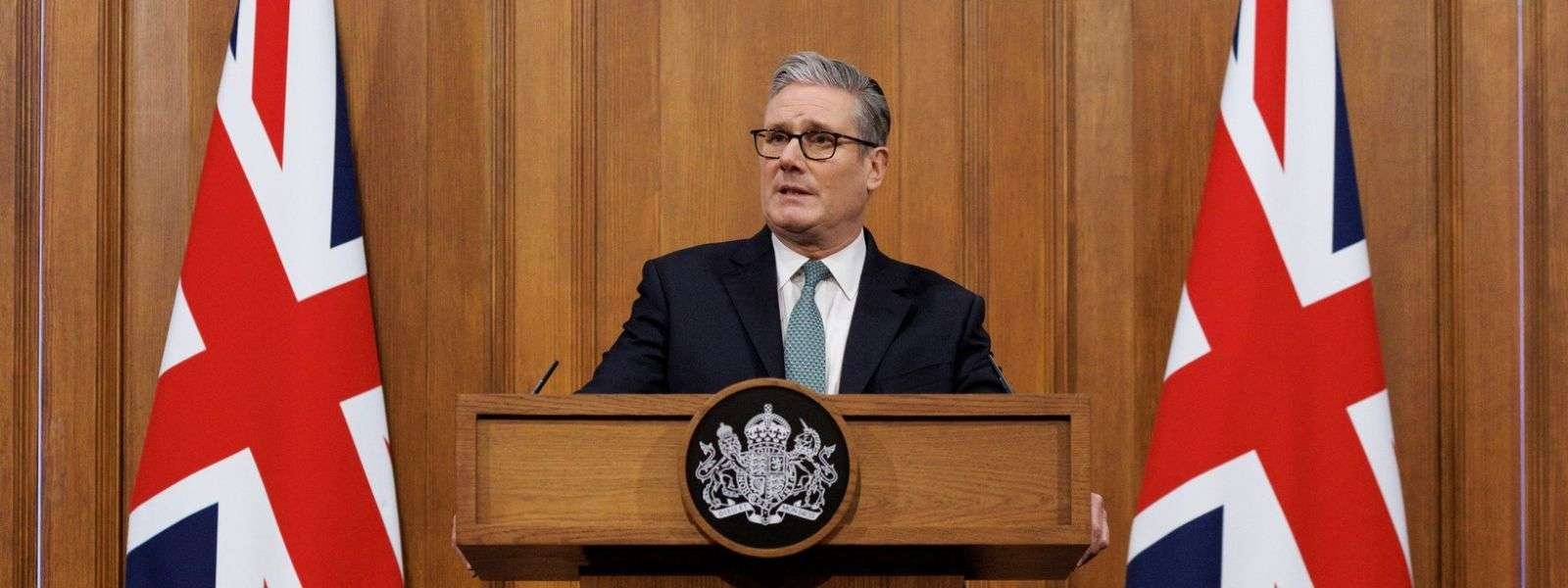
UK Will Not Be Drawn Into Wider War but Pushes to Secure Hormuz
UK Prime Minister Keir Starmer has reiterated that Britain will not be drawn into a wider regional war, while confirming that the government is actively working with international partners on a collective plan to keep the strategically vital Straits of Hormuz open.
Speaking about the ongoing conflict, Starmer said the government has remained “clear and consistent” in its objectives, with the national interest as its guiding principle. He outlined three priorities: protecting British people in the region, defending the UK and its allies without escalating the conflict into a wider war, and working toward a swift resolution that restores security and stability while stopping what he described as the Iranian threat to its neighbours.
“I want to see an end to this war as quickly as possible because the longer it goes on, the more dangerous the situation becomes and the worse it is for the cost of living back here at home,” Starmer said on Monday (16).
He warned that once the fighting stops, a negotiated agreement will be required to constrain Iran’s ability to rebuild its nuclear programme, pose a ballistic missile threat, arm proxy militias, and threaten international shipping.
Starmer said disruption to shipping routes is already hitting global supplies of oil, gas and fertiliser, driving up prices in the UK
The Prime Minister confirmed that the UK, alongside other countries, has already released emergency oil stocks “at a level that is completely unprecedented,” but said this was not a long-term solution. He stressed that reopening the straits is essential to stabilising markets, describing the task as complex and far from straightforward.
“We’re working with all of our allies, including our European partners, to bring together a viable collective plan that can restore freedom of navigation in the region as quickly as possible and ease the economic impacts,” he said, adding that decisions already taken mean the British economy is better placed than it otherwise would have been to weather the storm.
Responding to questions about the UK’s willingness to act while avoiding escalation, Starmer said the Straits of Hormuz is “obviously vital” to energy prices and the cost of living, making the issues inseparable. He confirmed discussions are ongoing with European partners, Gulf partners and the United States, and said the UK is examining a range of options
“We’ve already got autonomous mine-hunting systems in the region,” he said, adding that Britain is looking at further options and expertise while working with allies. He also referred to discussions around anti-drone capabilities.
Starmer said his instinct and first priority remain protecting people from the cost-of-living impact, noting that measures are already in place. He declined to speculate on what might happen in three or six months, saying it is impossible to predict how the situation will evolve. “The best way through this is to de-escalate and reduce the conflict because that is the single most effective way to deal with the cost of living,” he said.
When asked whether he was rejecting calls from President Donald Trump for an immediate Royal Navy commitment to keeping the Straits of Hormuz open, Starmer said the issue was discussed during a phone call with the US president. He said talks are continuing on a viable plan that involves as many partners as possible, including European, Gulf and US partners.
“This is to say the least not easy. It is not straightforward,” Starmer said, stressing the need for a credible and workable plan before any further steps are taken. While noting that UK mine-hunting systems are already in the region and that anti-drone capabilities have been discussed, he emphasised that the focus is not solely on Britain’s individual actions.
“This isn’t just about what the UK can do. It’s about how we play a part in bringing others together behind a viable plan,” he said. Starmer acknowledged the difficulty of achieving a ceasefire but said work is continuing on available options. He said that reopening the straits is essential, warning that without it, energy prices will remain high, directly affecting the cost of living, a challenge he said is central to the government’s response.
Local News
Govt. to amend Ayurveda Act
20 October 2026
PUCSL approves one-hour power cuts for 3 days: Schedule released
19 October 2026
Police seize firearms, ammunition and grenades from cinema hall
18 October 2026
Trending News
SIMs to be deactivated on unregistered new mobile devices from tomorrow
30 September 2020
CSE ASPI touch all-time high of 10,037.61
27 October 2021
Popular actress Sureni Senarath passes away
26 May 2021