
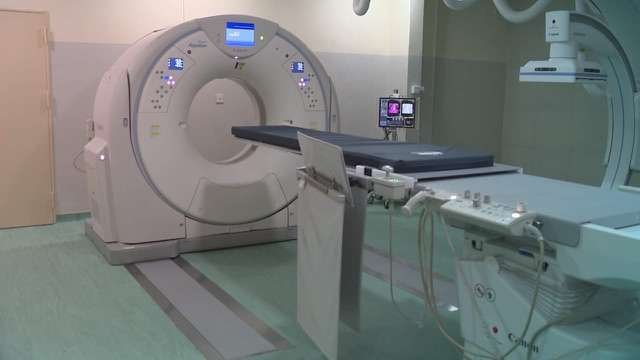
Rs 1.95 billion upgrade to Sri Lanka’s hospital system with 11 CT scanners
The government has launched a major programme to strengthen diagnostic services in the country’s hospital system with the provision of 11 advanced CT scanner machines at a cost of Rs 1,950 million, aimed at improving diagnosis of stroke, cancer, heart disease and other critical conditions.
The Ministry of Health and Mass Media, under the guidance of Minister of Health and Mass Media Dr Nalinda Jayatissa, is currently implementing a broad initiative to modernise and expand diagnostic services as part of efforts to enhance healthcare quality and strengthen physical resources in the public health system.
As part of the programme, priority has been given to expanding and upgrading CT (Computed Tomography) scanning services across hospitals islandwide, with the supply of modern equipment already underway based on identified needs.
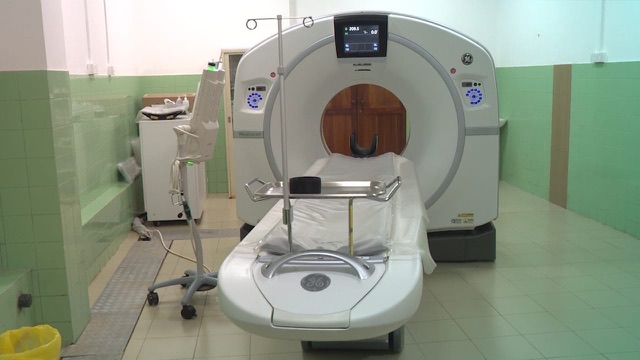
A 128-slice CT scanner valued at over Rs 200 million has been installed at the Kalutara Teaching Hospital, while a CT scanner valued at Rs 160 million has also been installed at the Kurunegala Teaching Hospital through the Ministry’s Biomedical Engineering Services.
In addition, four advanced CT scanners valued at around Rs 640 million have been provided to the Sri Lanka National Hospital, Kandy National Hospital, Karapitiya Teaching Hospital and Colombo South Teaching Hospital under Asian Development Bank (ADB) assistance. Installation work is currently in progress.
Procurement arrangements are also underway to provide further high-end CT scanners valued at Rs 950 million to Kuliyapitiya Teaching Hospital and to district general hospitals in Dambulla, Nawalapitiya, Chilaw and Mannar.
For many years, most government hospitals relied on 16-slice CT scanners. While these systems have provided essential services, the advancement of medical technology now requires faster and more accurate imaging, with 64-slice and 128-slice scanners enabling higher-quality results and quicker diagnoses.
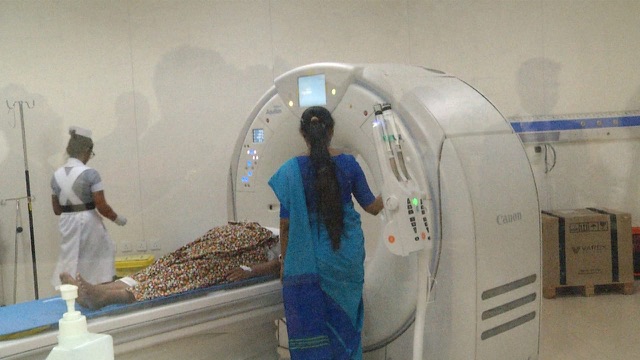
The ministry stated that the introduction of these modern systems will significantly improve diagnostic accuracy and speed in treating stroke, trauma, cancer, cardiovascular and emergency cases.
The programme also extends beyond the central health system to cover provincial council hospitals, ensuring that advanced diagnostic services are made available outside major urban centres. This is expected to reduce disparities in access to high-quality medical imaging services.
Officials noted that the investment is part of a broader healthcare reform process aimed not only at purchasing equipment, but also at reducing treatment delays, improving clinical decision-making and saving lives through faster diagnosis.
The expanded CT scanner network is also expected to support the country’s growing burden of non-communicable diseases, road traffic accidents and an ageing population, which continue to place increasing pressure on the healthcare system.
Local News
Red alert for severe lightning issued in 17 districts
07 October 2026
OMCT raises concerns over Sri Lanka’s proposed Anti-Terror Law
06 October 2026
Trending News
SIMs to be deactivated on unregistered new mobile devices from tomorrow
30 September 2020
CSE ASPI touch all-time high of 10,037.61
27 October 2021
Popular actress Sureni Senarath passes away
26 May 2021