
Sri Lanka moves to make NVQ qualifications mandatory for Solar & Cooling Technicians
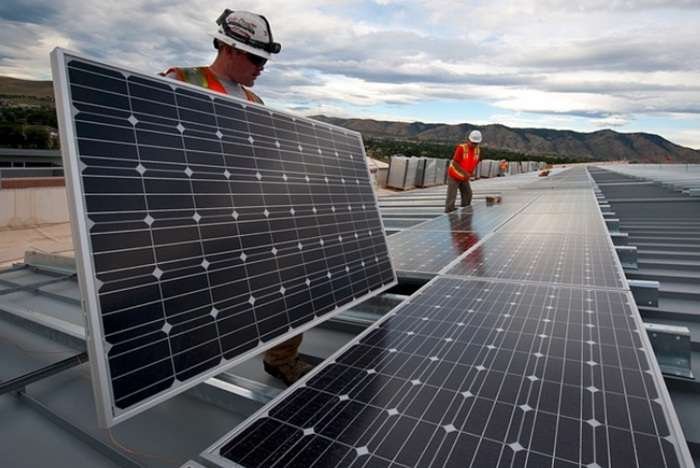
Sri Lanka is stepping up efforts to professionalize its renewable energy and technical workforce, with new regulations making National Vocational Qualifications (NVQ) mandatory for solar power and refrigeration technicians by 2030.
According to the Public Utilities Commission of Sri Lanka (PUCSL), community demand for renewable energy is rising sharply, with the government targeting 70% renewable energy by 2030. To achieve this, about 600 megawatts of solar capacity must be added annually to the national grid. Already, more than 1,000 companies are licensed to import and install solar systems, employing around 10,000 workers. However, most lack recognized professional certification.
To bridge this gap, the Sri Lanka Sustainable Energy Authority and the Public Utilities Commission of Sri Lanka have launched a program to train 5,000 solar technicians and 100 inspectors annually. So far, 1,500 technicians have been trained, with a fast‑track scheme now awarding NVQ Level 3 qualifications free of charge to those with more than two years’ industry experience.
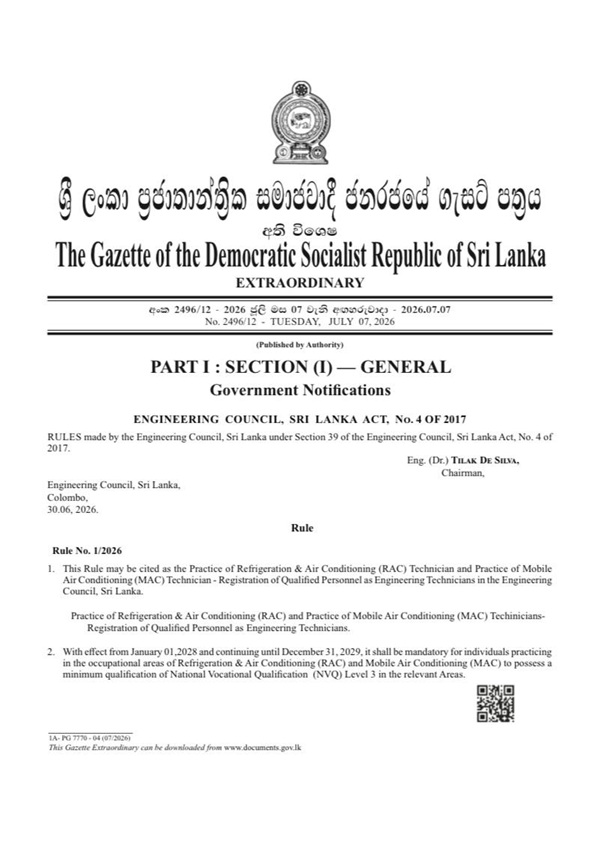
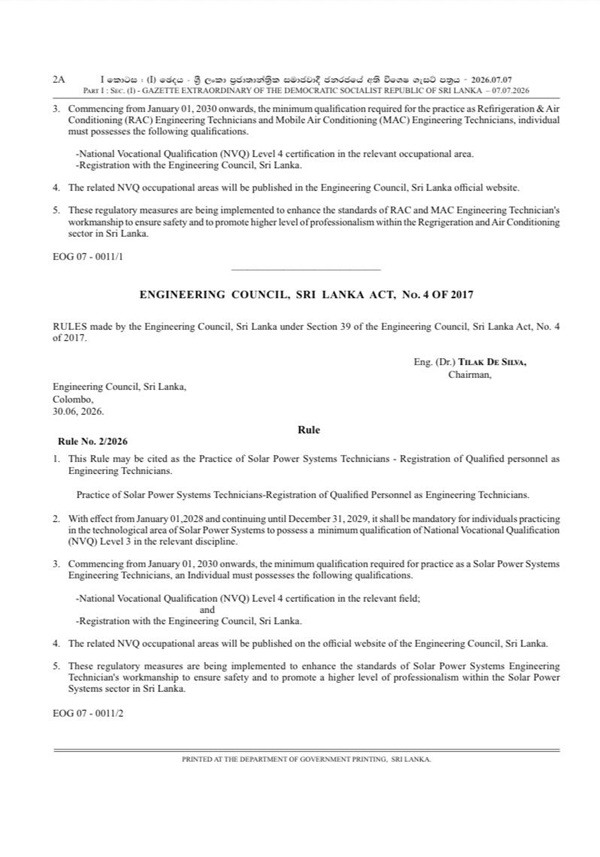
The Institution of Engineers Sri Lanka has gazetted regulations requiring NVQ Level 3 as the minimum qualification for solar technicians between Jan. 1, 2028 and Dec. 31, 2029. From Jan. 1, 2030, technicians must hold NVQ Level 4 in solar technology and be registered as engineering technicians. The PUCSL states that this will raise professional standards, ensure electrical safety, and support national renewable energy goals.
Parallel reforms are underway in the cooling sector. The National Ozone Unit of the Environment Ministry, together with the Public Utilities Commission, is offering free NVQ 3 and NVQ 4 qualifications to refrigeration, air conditioning, and vehicle air conditioning technicians. Regulations imposed on July 7, 2026 require NVQ Level 3 by 2028, with NVQ Level 4 and registration with the Institution of Engineers mandatory from 2030.
Authorities expect these measures to elevate technical standards, enhance safety, and contribute to both renewable energy targets and environmental protection goals.
Trending News
SIMs to be deactivated on unregistered new mobile devices from tomorrow
30 September 2020
CSE ASPI touch all-time high of 10,037.61
27 October 2021
Popular actress Sureni Senarath passes away
26 May 2021