International rights groups call to suspend Sri Lanka military deployment to Haiti
Fourteen international human rights and victims’ organisations have called for the immediate suspension of Sri Lanka’s planned deployment of around 900 soldiers and 140 police officers to Haiti, warning that no credible independent vetting process exists to screen personnel for past abuses.
In a joint statement directed at the UN, the Government of Haiti, and the Standing Committee of the Gang Suppression Force (GSF), the groups said current screening relies largely on self‑certification by the Sri Lankan military and police, supplemented by U.S. Embassy checks, which they argue are inadequate.
The organisations highlighted Sri Lanka’s past record in Haiti, where UN investigations found widespread sexual exploitation of children by peacekeepers between 2004 and 2007, and raised concerns about senior officials involved in facilitating the new deployment.
They urged the UN and GSF to suspend the mission until an independent vetting mechanism with OHCHR participation is established, and called on Sri Lanka to respond to outstanding questions from the UN Committee Against Torture and provide reparations to victims.
Full statement :
Fourteen international human rights and victims’ organisations have called for the immediate suspension of deployment of approximately 900 Sri Lankan soldiers and 140 police officers to Haiti, warning that no credible independent vetting process is in place to screen personnel for past human rights violations.
The joint statement, released today, is directed at the UN, the Government of Haiti, and the Standing Committee of the Gang Suppression Force (GSF), the multinational security mission authorised by the UN Security Council to conduct counter-gang operations in Haiti.
At the heart of the concerns is the adequacy of the screening process for deploying personnel. The organisations say vetting appears to rely primarily on information supplied by the Sri Lankan army and police themselves, supplemented by a review of names by the US Embassy in Colombo.
The groups argue this does not constitute an independent human rights vetting mechanism.
They point to the fact that at least one candidate has already been rejected by the US Embassy under Leahy Law as evidence that the Sri Lankan military has been putting forward individuals with human rights red flags, undermining any claim that the self-certification process is reliable.
The groups note that the only previously credible check on Sri Lankan peacekeeper deployments, a joint screening process between the Human Rights Commission of Sri Lanka (HRCSL) and the UN Office of the High Commissioner for Human Rights (OHCHR), collapsed in 2024.The Human Rights Commission’s own Lessons Learnt Report, published in December 2024, acknowledged that the process needed to be conducted jointly with OHCHR, which holds confidential UN investigation files and witness testimony that the HRCSL could not access independently.
The groups raised particular concerns about two senior Sri Lankan officials who have reportedly been centrally involved in facilitating the deployment. They are H.S. Sampath Thuyacontha, Sri Lanka’s current Secretary of Defence, who commanded the only Attack Helicopter Squadron, the no 9 squadron with Mi-24s, during the final phase of the civil war. The second official is Air Commodore Asela Vasantha Jayasekara, Sri Lanka’s Military Adviser to the UN in New York, who served in the MiG-27 ground attack unit during the same period. The organisations stress that neither individual has been found individually responsible for specific violations. Their concern is institutional: “Individuals whose conduct, command responsibilities, or operational roles could themselves reasonably warrant independent assessment should not be responsible for supervising, certifying, or advocating for the screening of others,” the statement says.
The statement draws heavily on Sri Lanka’s previous peacekeeping record in Haiti. Between late 2004 and October 2007, at least 134 members of successive Sri Lankan military contingents deployed to Haiti under a UN mandate were implicated in the sexual exploitation and abuse of Haitian children, some as young as nine years old.
A confidential UN investigation found the abuse was “frequent… at virtually every location where Sri Lankan military were deployed,” and that commanding officers were aware and directly implicated. One child told investigators he had been abused by more than 100 Sri Lankan soldiers.
Despite initial reports of 134 suspects, Sri Lanka’s official account of those held accountable has shrunk progressively, from 23 said to have been convicted in 2008, to 18, then 9, and finally just 3 in a 2018 Right to Information response. Sri Lanka told the UN Committee Against Torture the matter was closed in 2014, but never responded to the Committee’s follow-up questions. No UN body has confirmed the matter was resolved to its satisfaction.
The Sri Lankan contingent is expected to be based in the Artibonite region, the same area in which allegations of sexual exploitation and abuse involving children arose during the preceding Kenyan-led mission.
Concerns have also been raised about whether personnel from Sri Lanka’s Special Task Force (STF) may be included in the police contingent, given the operational profile of the deployment. Reports indicate that some proposed STF personnel may have already been excluded following review under the US Leahy Law framework.
The organisations are calling on the UN and GSF Standing Committee to:
- Immediately suspend deployment until an independent vetting mechanism is in place, with full OHCHR participation and access to all relevant UN records.
- Ensure that officials with potential conflicts of interest play no role in certifying or approving the screening process.
- Require publication of the names and photographs of all deploying personnel before deployment.
- Establish a victim-accessible, confidential complaints mechanism in Haiti.
They are also calling on the Government of Sri Lanka to respond to pending questions from the UN Committee Against Torture regarding the 2004–2007 abuse cases, and to provide reparations for identified victims.
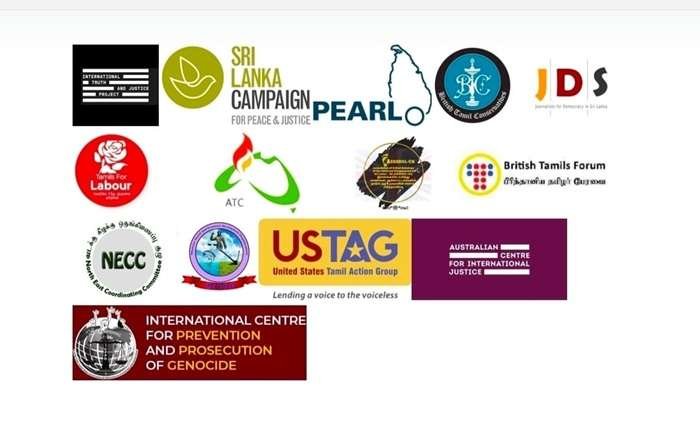
The statement is signed by fourteen organisations, including the International Truth & Justice Project (ITJP), the Sri Lanka Campaign for Peace & Justice, People for Equality & Relief in Lanka (PEARL), the British Tamils Forum, the United States Tamil Action Group (USTAG), the Australian Centre for International Justice, and the International Centre for Prevention & Prosecution of Genocide, among others.
Local News
Litro to distribute 350,000 gas cylinders within three days
23 October 2026
Trending News
SIMs to be deactivated on unregistered new mobile devices from tomorrow
30 September 2020
CSE ASPI touch all-time high of 10,037.61
27 October 2021
Popular actress Sureni Senarath passes away
26 May 2021